
Paperwhite (and their cousins) Growing Information
No Experience Required
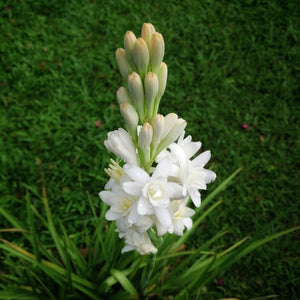
If you're just getting started with gardening, paperwhites are an excellent first project. They are fast, easy, fragrant and beautiful. For outdoors all you need is a sunny site in zones 8-10. Indoors you'll need just a pretty bowl or shallow pot, some pebbles, a few big bulbs and some sunshine. You can do this. Give it a try.
And if you've ever had your paperwhites grow taller than you'd like, there's a simple way to reduce this by about a third. Click for full details: Growing Shorter Paperwhites. We've tried this and it works!
Outdoor Beds
1. Find a location where the soil drains well. If there are still puddles of water 5-6 hours after a hard rain, scout out another site. Or amend the soil with the addition of organic material to raise the level 2-3 inches to improve the drainage. Peat moss, compost, ground bark or decomposed manure all work well and are widely available.
2. Plant your paperwhites where they will receive sun for all, or most, of the day. Dig holes and plant the bulbs with their pointed tops 3-4 below the soil surface. Allow 4 to 5 bulbs per square foot.
3. Plant in September through December. Paperwhites are tough and can be planted in 100 degree or 40 degree soil.
4. After planting water well, thoroughly soaking the soil. Most bulbs will begin to grow roots in just a few days, but allow some leeway to respond to individual conditions. Buds and blooms will appear in late winter or early spring, depending on the variety and your climate.
5. When this season's blooms are past, your bulbs need to store energy for next year's show. Allow the leaves to photosynthesize (process sunlight to produce food) until they yellow and wither. This is the time to remove the spent foliage. Trimming still-green foliage will reduce the plant's ability to nourish next year's flowers, resulting in fewer, smaller flowers.
6. Water during the late fall and winter with a water-soluble fertilizer to nourish the bulbs as they develop new roots and top growth. Your bulbs will survive without fertilizer, but providing extra nutrients encourages more flowers, larger blossoms and longer life for your bulbs.
Pots, Tubs, Urns & Windowboxes
1. Start with containers of good quality, well-drained soil. Almost any commercially available potting medium will work just fine. Make sure your container has adequate drainage holes; the bulbs must never sit in waterlogged soil.
2. Site your containers where they will receive sun for all, or most, of the day.
3. Plant your bulbs close to each other, with hips about an inch apart, for the most brilliant display. Tuck them down 2-3 inches into the soil.
4. After planting water well, thoroughly soaking the soil. Most bulbs will begin to grow roots in just a few days, but give your bulbs some leeway to respond to individual conditions. Buds and blooms will appear in late winter or early spring, depending on the variety and your climate.
5. When this season's blooms are past, your bulbs need to store energy for next year's show. Allow the leaves to photosynthesize (process sunlight to produce food) until they yellow and wither. This is the time to remove the spent foliage. Trimming still green foliage will reduce the plant's ability to nourish next year's flowers. The result will be fewer, smaller flowers.
6. During the hot dry summer, pots of daffodils can be retired to a shady, out of the way location where they can rest. When fall returns, pull the daffodil pots out into the sun and, begin watering with a little fertilizer. The cycle can be repeated for years.
Forcing Paperwhites Indoors (Ziva, Inball, Nir, Ariel, and Chinese Sacred Lilies)
1. Paperwhites need only 2-3 of root room so shallow containers work well. Pretty glass or ceramic bowls are ideal. For one-of-a-kind presentations, scout antique stores and estate sales for unusual containers.
2. Plant your paperwhites in soil, pebbles, tumbled beach glass, terra cotta pellets (sold by orchid suppliers) or glass marbles. The planting medium just needs to provide support for the plants and must be suitable for roots to grow through. Because paperwhites are usually discarded or transplanted after flowering, the container's planting medium doesn't need to supply nutrients.
3. Plant the bulbs with their wide bottoms down and the top inch of each bulb above the soil/pebble line. Plant close together, almost touching, for the most floriferous display.
4. Add water so the soil is moist. If planted in pebbles, chips or marbles, add enough water to come within 3/4 of the top of the pebbles. This will keep the base of the paperwhite bulb moist without soaking the entire bulb.
5. Place the pot or bowl in sunny or very bright location. Lots of light will keep stems from growing too tall and becoming floppy. In a week or two, roots will appear, with top sprouts following shortly thereafter. Bud and blooms develop quickly; it's fun to watch the daily progress. You'll be enjoying blooms and fragrance in a few short weeks.
6. If you live in a frost-free area, after your paperwhites have bloomed you may move them to the garden for future flowering. Simply transplant them to a sunny site. Handle the bulbs gently so the roots remain intact. Water well. Fertilize lightly when transplanted and again beginning in the fall.
Note:
We recommend choosing paperwhites, rather than other types of narcissus, for indoor forcing. This group of bulbs require no special cooling or conditioning. Flowers appear in 30-40 days and are wonderfully fragrant.
|